🎓 Portugal's education minister warns fee freeze will cost universities millions
In brief
- 🎓 Portugal's parliament keeps university tuition fees frozen for 2027/2028, against the government's wishes.
- 💶 Education minister Fernando Alexandre says universities will lose "tens of millions of euros".
- ⚖️ He challenges the Socialists and Chega to say who should pay for students' education.
- 📅 No compensation is possible, he says, because the 2027 budget is already approved.
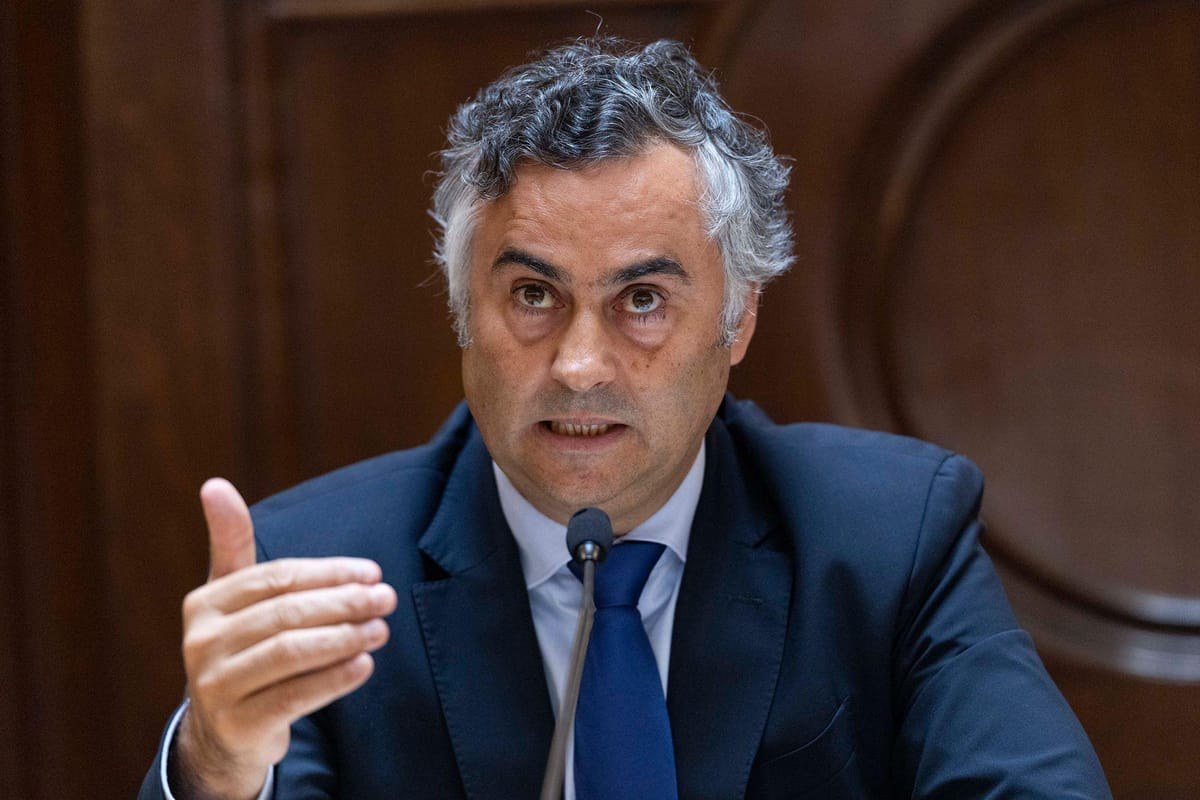
🎓 Portugal's education minister Fernando Alexandre sharply criticised the renewed freeze on university tuition fees on 27 November. Earlier that week parliament had confirmed an amendment by the right-wing populist party Chega that keeps fees frozen for the 2027/2028 academic year. The governing parties and the liberal IL voted against; the Socialists (PS), Chega and several left-wing parties voted in favour. 💶 According to Alexandre, universities will lose "tens of millions of euros" next academic year in revenue they already had. Worse, he said, the higher-education law passed in July explicitly requires legislative changes to be budget-neutral for universities, yet parliament changed the rules without compensating them. The minister challenged the PS and Chega to say openly whether they reject tuition fees as a structural part of university funding, and whether they think it fair that all taxpayers pay for the education of part of the population. Compensation is no longer possible because the 2027 state budget has already been approved, he said. According to the government, the planned increase would have been less than two euros a month.
📍 **Where and when.** Alexandre spoke to reporters in Vila Nova de Famalicão in northern Portugal after inaugurating the renovated Padre Benjamim Salgado secondary school, a project that cost 20 million euros. The news agency Lusa carried his remarks, and CNN Portugal and Jornal de Negócios published them in the same wording. The minister gave no exact figure: he spoke only of "tens of millions of euros" that universities will be missing in the coming academic year.
🏛️ **The second year running.** It is not the first time the opposition has outvoted the government on fees. During the debate on the 2026 budget, a Socialist amendment imposed the freeze for 2026/2027 after Chega changed its vote at the last minute; a rival proposal by the PSD and CDS-PP to index fees to inflation failed at the time. Alexandre himself said parliament had "once again in November, as it had done last year" taken revenue away from universities. This time the amendment came from Chega; according to the Lusa report the PS, Chega, BE, PAN and JPP voted in favour, the PSD, CDS-PP and IL against, and the PCP abstained.
💶 **The sums involved.** The maximum fee for a bachelor's degree at a public university has stood at 697 euros a year since 2020/2021, according to RTP. The freeze dates back to 2016, when parliament, on a proposal of the Communist PCP, fixed the then ceiling of 1,067.85 euros, which was then cut step by step. The government wanted fees to rise with inflation again; for 2026/2027 it had named about 710 euros, an increase of 13 euros a year. For the adjustment now blocked, the government cites less than two euros a month. Each family would pay little, but across all students it adds up, in the minister's account, to a noticeable sum for the institutions.
⚖️ **The budget-neutrality argument.** Alexandre bases his criticism on the new legal framework for higher-education institutions (RJIES), passed in July. It provides that legislative changes must not burden university budgets. Because parliament cut revenue without voting compensation, the minister places the responsibility with the opposition: the government increased its share of funding, he said, while the fee revenue was removed by the Assembly of the Republic.
❓ **The political question behind it.** With his appeal to the PS and Chega, Alexandre targets the basic question of who pays for a degree: students through a contribution of their own, or all taxpayers. Supporters of the freeze argue that fees deter families with little money from studying; the minister counters that the cost is then borne by everyone, including those who never go to university. For the universities the situation remains open for now: the 2027 budget is approved and, according to Alexandre, contains no compensation.
Sources
- Congelamento das propinas vai custar "dezenas de milhões de euros" às universidades, avisa ministro (CNN Portugal (Lusa))
- Ministro diz que universidades perdem "dezenas de milhões de euros" com congelamento das propinas (Jornal de Negócios (Lusa))
- Orçamento do Estado. Oposição mantém congelamento das propinas no próximo ano letivo (RTP)