⚖️ Sea law tribunal turns down Argentina: Sea Lion oil project off the Falklands can go ahead
In brief
- ⚖️ The International Tribunal for the Law of the Sea in Hamburg on Saturday rejected all four urgent measures Argentina sought against the Sea Lion oil project, by 18 votes to 3.
- 🧭 Reason: the request could not be decided without ruling on the islands' sovereignty, which lies outside the UN sea law convention.
- 🛢️ Drilling is due to start at the end of March 2027, production in 2028.
- 🇦🇷 Buenos Aires says the ruling is "not the last word"; the arbitration on the merits continues.
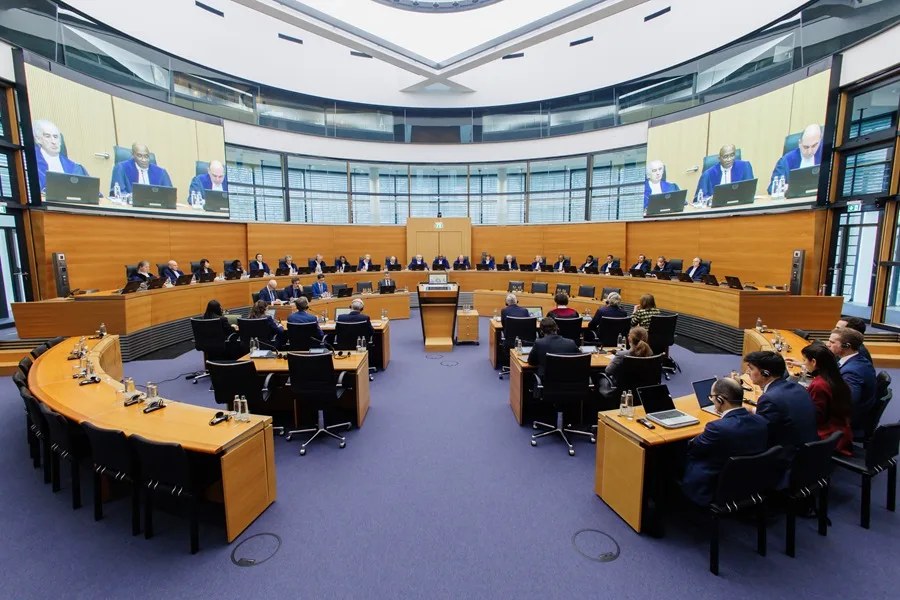
⚖️ Argentina has failed in its attempt to stop the British-licensed Sea Lion oil project off the Falkland Islands (Malvinas in Spanish) through an urgent order. The International Tribunal for the Law of the Sea (ITLOS) in Hamburg on Saturday rejected, by 18 votes to 3, all four provisional measures Buenos Aires had requested in October. Reading the order, the tribunal's president Maurice Kamga said the request would require a decision on the territorial sovereignty of the islands, which falls outside the interpretation or application of the UN Convention on the Law of the Sea. 🛢️ That removes an immediate legal obstacle for the project, which Israel's Navitas Petroleum (65 percent) and Britain's Rockhopper Exploration (35 percent) are developing about 220 kilometres north of the islands. Euronews puts its value at about 2.1 billion US dollars; drilling is to start at the end of March 2027 and production in 2028. 🇦🇷 The government of President Javier Milei said it respects the decision but that it is "not the last word". The arbitration under Annex VII of the convention, where the dispute itself will be heard, goes on. London spoke of an Argentine failure and urged Buenos Aires to end its economic pressure on the islands.
📜 What the tribunal actually decided. ITLOS was not asked to judge the dispute itself, only whether to order protective measures until an arbitral tribunal is formed. To do so it first has to find that the future tribunal would at first sight have jurisdiction. That is where Argentina failed: according to the Spanish news agency EFE, the order says the provisions Argentina invoked "do not appear prima facie to afford a basis" for the jurisdiction of the Annex VII tribunal. Three of the 21 judges voted against.
🧭 The two arguments. Argentina had insisted the case was not about sovereignty over the British-administered islands but about one concrete project that would create a fait accompli with "irreversible" consequences for the marine environment of the South Atlantic, including waters Buenos Aires counts as part of its continental shelf. It also pointed to a UN General Assembly resolution urging both sides to avoid unilateral steps while the dispute lasts. Britain replied that the request was only a pretext to use the convention and the tribunal for the sovereignty question.
🤝 Assurances the tribunal recorded. London told the tribunal that drilling will not begin before 21 March 2027, extraction not before March 2028, and that no new licences will be granted because the licensing regime is suspended. The tribunal took note of these as guarantees. It also encouraged both states to cooperate in setting up the arbitral tribunal quickly and stressed that the convention applies in disputed maritime areas – a line Argentina is likely to lean on in the main proceedings.
🗣️ The reactions. Argentina's government said it will defend its rights "through all diplomatic, legal and administrative channels" and that no unilateral British action can extinguish its sovereign rights. On Friday Buenos Aires had already opened new sanction proceedings against five companies or people involved as suppliers to Sea Lion. On the British side, EFE reports, Foreign Secretary Ed Miliband and Attorney General Ellie Reeves said the UK has no doubt about its sovereignty over the islands and the surrounding waters. They pointed to the 2013 referendum in which 99.8 percent of voters backed remaining a British overseas territory; Argentina does not recognise that result.
🌊 What the project means. For the islands, whose economy relies mostly on fishing, oil production could be a turning point. For relations between London and Buenos Aires it is a strain: after taking office in 2023, Milei had at first sought closer trade ties with Britain. The conflict over the islands dates back to 1833, and in 1982 the two countries fought a 74-day war over them. Euronews expects the arbitration on the merits could take years.