🇧🇴 Thousands march in Bolivia against the cost of living and President Paz's reforms
In brief
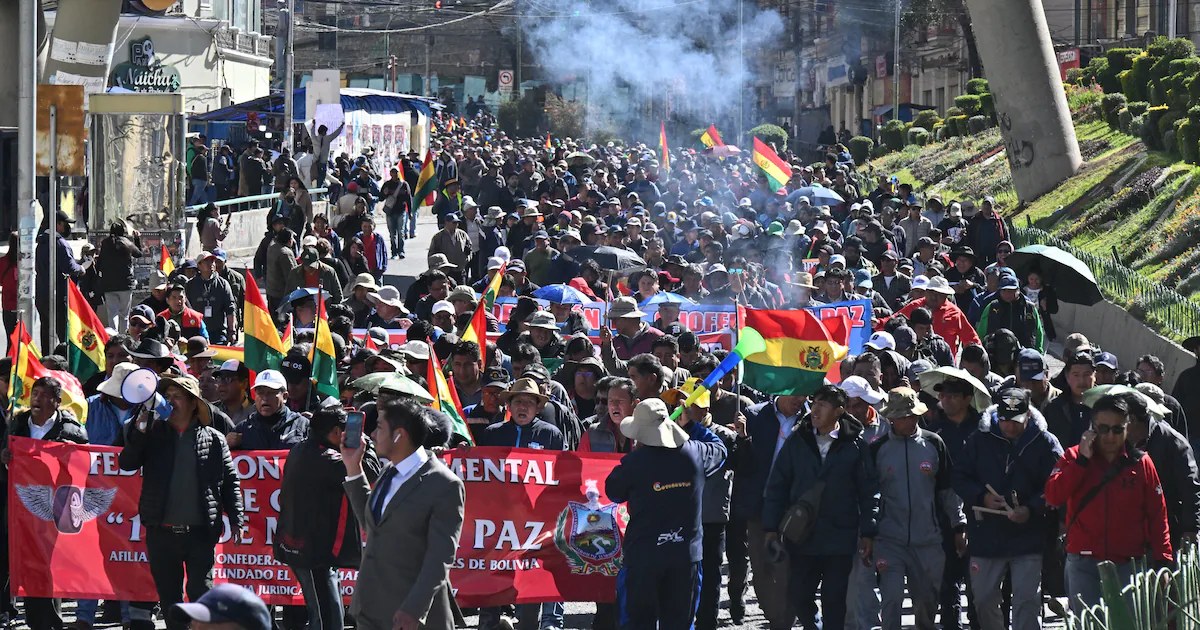
- 🪧 About 2,000 miners, teachers, farmers and students marched through La Paz on Friday; protests were also reported in Cochabamba and Santa Cruz.
- 💶 They demand an end to the worst economic crisis in four decades and reject reforms of President Rodrigo Paz.
- ⛽ Transport unions announce a national strike from Monday, 30 November, after diesel rose by 14 %.
- 🚔 La Paz stayed peaceful; in Cochabamba police used tear gas against teachers.
🇧🇴 Thousands of people took to the streets in Bolivia on Friday against the high cost of living and the reform policy of President Rodrigo Paz. According to the news agency AFP, about 2,000 miners, workers, teachers, farmers and students marched through the centre of La Paz, the seat of government, carrying union banners. Local media also reported rallies in Cochabamba in the centre and Santa Cruz in the east of the country. 💶 The protesters demand an end to the country's worst economic crisis in four decades. The unions also oppose several government plans: decentralising technical education, restructuring loss-making state companies and a new mining code that is still being drafted. ⛽ The next conflict is already set: transport unions have announced a national strike in several cities from Monday, 30 November. The trigger is a 14 % rise in the price of diesel, to the equivalent of 1.75 US dollars a litre. The government scrapped the fuel subsidy two months ago as part of a deal for a large loan from the International Monetary Fund.
🗣️ Voices from the street. Participants told AFP how hard prices are hitting daily life. Esperanza Murillo, a 65-year-old municipal worker, had walked with her union from neighbouring El Alto into the city centre. Women no longer know what to put in their cooking pots, she said; everything is going up while workers' wages stretch less every day. Edwin Peredo, 46, the leader of a miners' union whose members marched in helmets with head lamps, spoke of families who are truly suffering hunger and misery. Fidel Condori, a 22-year-old student from a rural Andean area, pointed to diesel: when it goes up, everything goes up, and the government does not think of humble people.
🚩 Scenes from the march. Alongside the union banners, protesters carried images of Che Guevara and flags of Indigenous movements. AFP said the march in La Paz was peaceful. Police nevertheless announced the arrest of four people who allegedly carried explosives. In Cochabamba, riot police dispersed a teachers' rally with gas, according to local media.
⛽ The fight over diesel. The 14 % increase brings a litre of diesel to 1.75 US dollars. For the transport unions it is the reason for the shutdown announced from Monday; unions and protesters see it as the engine of wider inflation, because higher transport costs pass through to food and other goods. Ending the subsidy is among the commitments the government made in return for a loan from the International Monetary Fund.
📜 State of exception since June. Bolivia has been under a state of exception since June. With it, the Paz government contained a wave of protests that paralysed the country for 53 days in May and June. Friday's rallies show that union resistance to austerity and reform has not gone away despite those special rules. Whether the transport strike from 30 November brings the country to a halt again, and how the government responds, remains open. 🌍